
Personalisation Is No Longer a Trend. It Is Becoming Jewellery Retail’s Margin Strategy
Olivier FelicioFor years, personalisation sat in the industry as a soft add-on. An engraving. An initial. A birthstone swap. Something nice to offer once the real sale had already been made.
That is no longer what is happening
In today’s market, personalisation is becoming something far more important: a way for jewellers to protect value in a business climate where consumers are more selective, price resistance is higher, and inventory that can be easily compared online is under constant pressure.
In that kind of market, the pieces that are hardest to compare often become the easiest to sell.
That is where personalisation starts to matter differently
The opportunity is not simply that clients want jewellery with meaning. They do. But the more important retail reality is that personalisation shifts the conversation away from commodity thinking. The moment a piece reflects a story, a milestone, a family connection, or a personal symbol, it becomes less interchangeable.
It is no longer just a gold chain, a pendant, or a ring. It becomes their chain, their pendant, their ring.
Jewellery sits at the intersection of emotion, identity, and perceived lasting value. Self-purchase jewellery has also grown as the category becomes less dependent on bridal or traditional gifting occasions.
That should change the way you think about personalisation
The old model treated it as custom work for a narrow slice of clients. The stronger model is broader. It treats personalisation as a layered retail architecture.
At the entry level, that may mean engravable pieces, initials, medallions, birthstones, and symbolic motifs. At the mid-level, it may mean modular chains, charm stories, layering systems, or pieces designed to mark a promotion, a new child, an anniversary, or a reinvention.
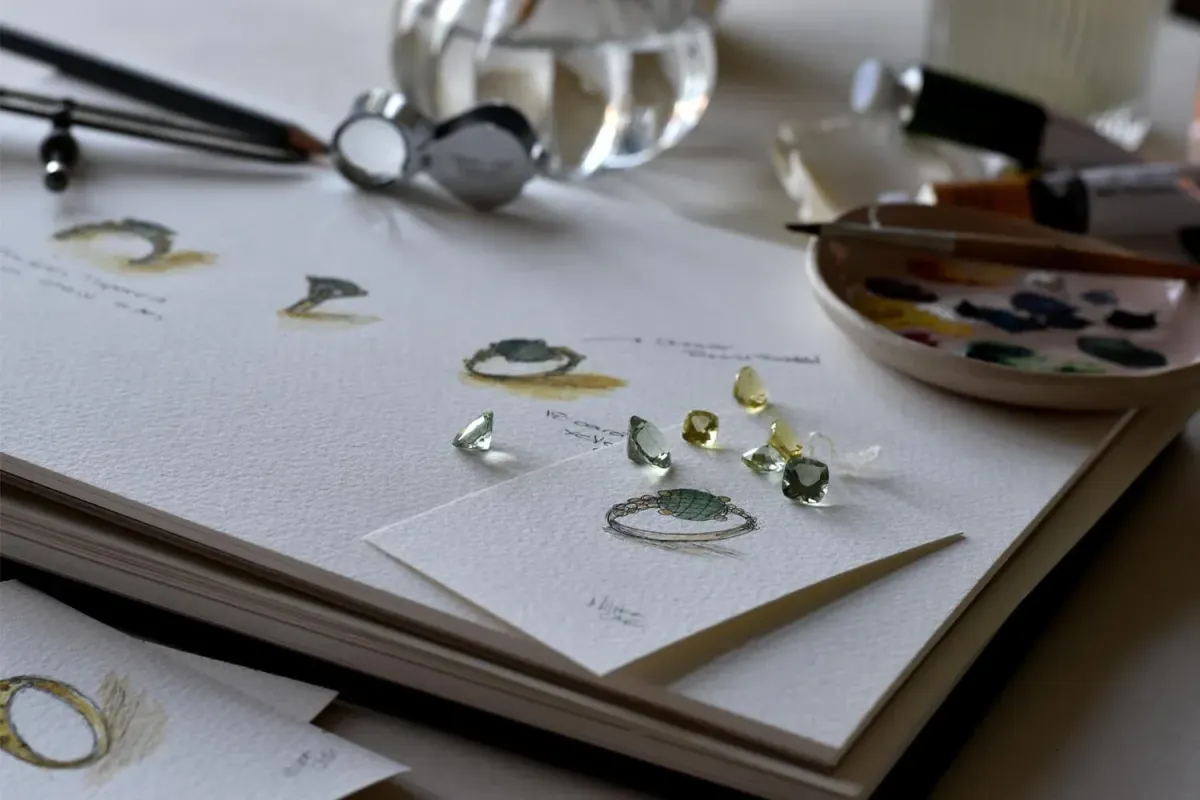
At the high end, it becomes redesign, bespoke creation, heirloom transformation, and one-of-one storytelling. What matters is not whether every piece is fully custom. What matters is whether the jeweller gives the client a role in authorship.
That shift is already affecting the supply side. Retailers increasingly need scalable ways to fulfil custom requests. Personalisation is moving from artisanal exception to operational expectation.
The strategic implication is significant
In a market where store traffic is under pressure and fewer units are being sold, the path to growth is not simply stocking more. It is creating more reasons to choose you over the seller down the street or the marketplace tab open on a customer’s phone.
Personalisation helps do that because it increases emotional relevance, reduces direct comparability, and creates better follow-up business.
The first meaningful piece often opens the door to the second: a chain becomes a charm story, a birthstone piece becomes a family story, an inherited item becomes a redesign project, and a repair conversation becomes a custom commission.
This is why the most forward-looking jewellers are no longer asking whether personalisation is “in.” That question is already outdated.
The better question is how deliberately they are building it into their business model
Are they merchandising with enough flexibility for the client to participate? Are they presenting jewellery as product only, or as a platform for story, symbolism, and milestone marking? Are they training sales teams to ask discovery questions that uncover meaning, not just budget?
At Dioro Jewellery, we believe this is one of the most important shifts jewellers should be watching. Not because personalisation is new, but because its role has changed. It is no longer just an emotional feature. It is becoming a smarter commercial one.
And in a market where value must be felt as clearly as it is priced, that distinction matters.